-
Burning Index (BI) -
Extended Attack Assessment Index (EAA) -
Energy Release Component (ERC) -
Fire Behavior Index (FBI) -
Fire Path -
Fire Potential Index Composite (FPIC) -
Fire Potential Wind Index (FPWI) -
Fireline Intensity (FLI) -
Flame Length (FL) -
Head Fire Intensity (HFI) -
Ignition Probability or Probability of Ignition (POI) -
Initial Attack Assessment (IAA) -
National Fire Danger Rating System - Version 2016 (NFDRS16) -
Probability of Failure (POF) -
Rate of Spread (ROS) -
Rothermel Model -
Severe Fire Danger Index (SFDI) -
Spotting -
Spread Component (SC) -
Terrain Difficulty Index (TDI)
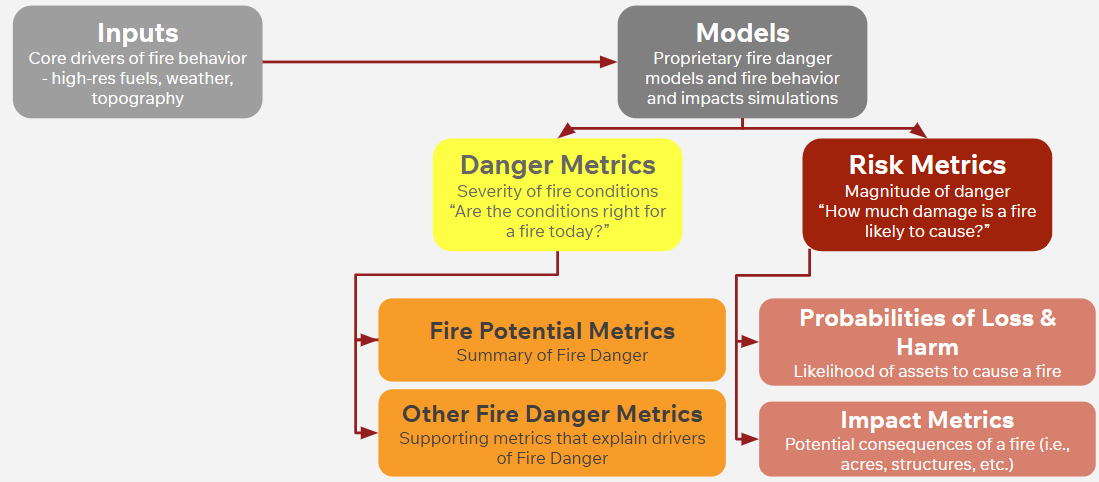
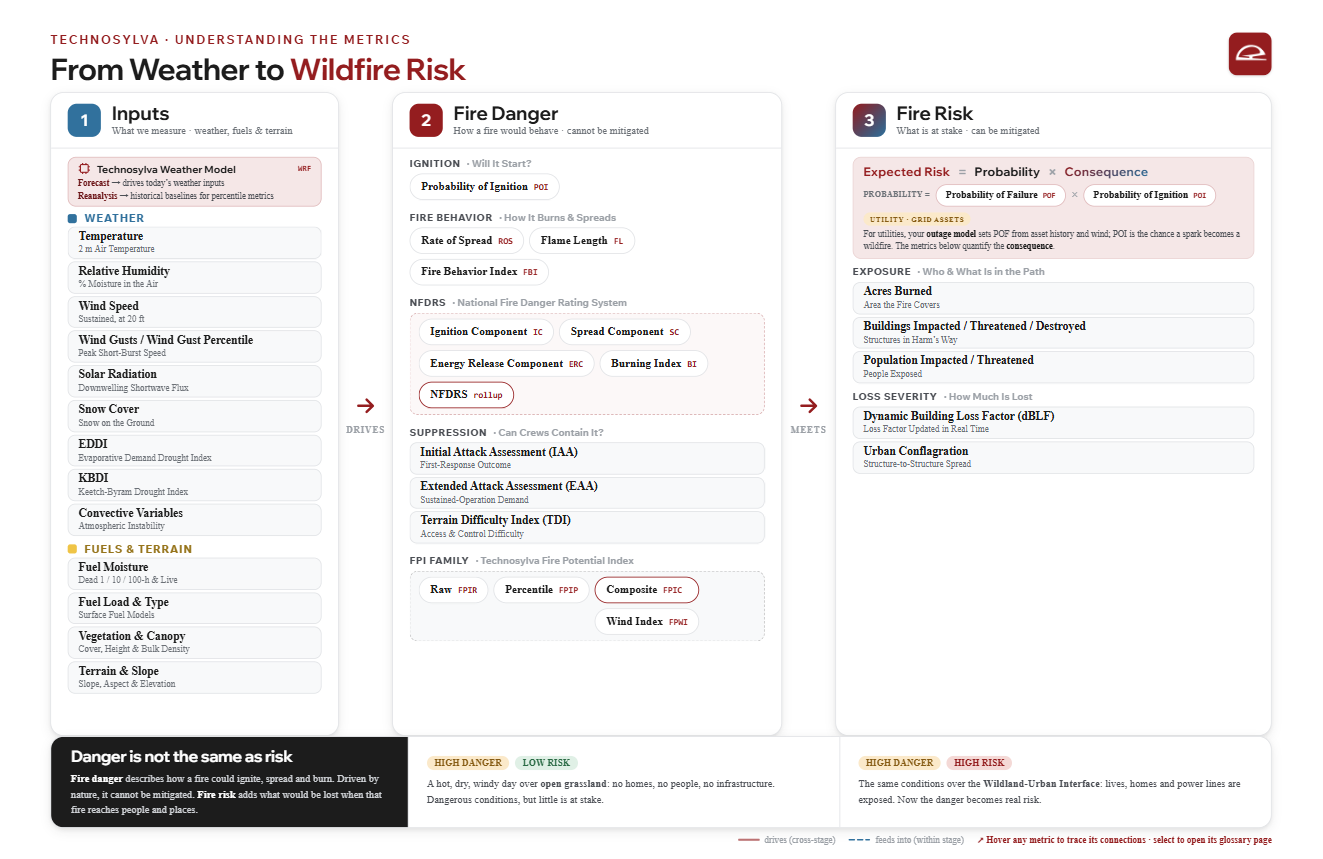
Fire danger refers to the potential for fire ignition, spread, and difficulty of control based on environmental and meteorological conditions. Unlike some components of fire risk, which incorporates the potential consequences of a fire occurring in a given area, fire danger cannot be mitigated.
Scenario 1: High Fire Danger, Low Fire Risk vast open grassland with no homes or infrastructure on a hot, dry, windy day. Despite the dangerous conditions, fire risk is low because there are no people, structures, or values at stake.
Scenario 2: High Fire Danger, High Fire Risk Wildland-Urban Interface (WUI) on a hot, dry, windy day. Here, the same dangerous fire conditions now translate to high risk because lives, homes, and infrastructure are exposed.